Size Guide Jewellery

Size guide

Quickly to the right guide
Bracelet length Necklace length Ring size Watch guide

Bracelet length

Bracelet sizes clearly sorted by group

Determining the right bracelet length isn’t always easy. This overview provides guidance on the most common standard bracelet sizes.

Kids
Toddlers
12–14 cm
School children
14–16 cm

Adjustable models are ideal.

Women
Very narrow
14–15 cm
Narrow
16–17 cm
Standard
17–18 cm
Larger
19–20 cm

18 cm is common, but 14–15 cm for very delicate wrists.

Men
Narrow
19–20 cm
Standard
21–22 cm
Larger
22–24 cm
Most common
21 cm

21 cm is the most common men’s size.

How do I measure my bracelet size?
  • Measure your wrist just above the wrist bone.
  • Wrap the tape measure loosely and add a small comfort allowance: women + 1.0–1.5 cm, men + 1.5–2.0 cm, kids + 0.5–1.0 cm.
  • No tape measure? Use a piece of string or a strip of paper and measure it with a ruler.
  • Note: Wide bracelets fit tighter than slim designs—when in doubt, choose one size up. The length stated in the shop refers to the total bracelet length including the clasp. Engraved items are excluded from exchange/returns.
Image: bracelet lengthsBracelet lengths
Wrap bracelets and bangles
Wrap bracelets
  • Single wrap: circumference + 2.5 cm
  • Double wrap: (circumference + 3.5 cm) × 2
  • Triple wrap: (circumference + 3.5 cm) × 3
Bangles

Closed bangles: Determine the size based on the widest part of your hand.

Open bangles: Try on directly at the wrist. Slightly adjustable. Wider designs fit more snugly.

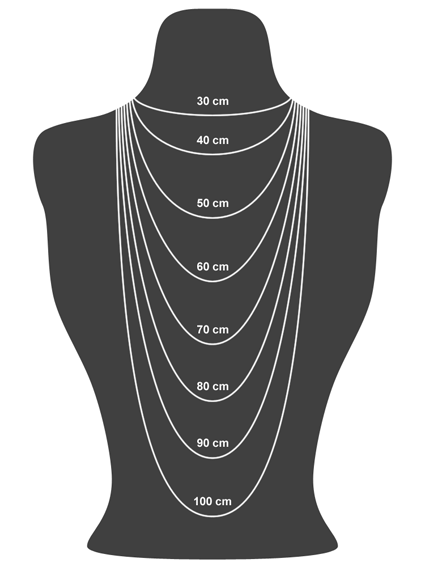
Necklace length

Finding the right necklace length

It’s easy to fall in love with a necklace—but will it suit you? This overview helps you choose the right necklace length.

35–40 cm Short necklace Sits very close to the neck and creates an elegant look.
40–50 cm Standard necklace A popular everyday length and ideal for pendants.
50–65 cm Long necklace A versatile length that suits many outfits and occasions.
65–100 cm Very long necklace Can often be worn in different ways, for example as a double strand.
Image: necklace length graphic Necklace length graphic

Ring size

How is ring size specified?

For our rings, we use the German sizing system, stated as the inner circumference in mm. Alternatively, the inner diameter in mm can be used.

Not all sizes are available for every ring. Please check the available sizes on the respective product page.

Note: Engraved rings, rings with modified stone settings, and rings made especially for you are excluded from exchange/returns.
Ring size table
Inner circumferenceInner diameter
45 mm14.3 mm
46 mm14.6 mm
47 mm15.0 mm
48 mm15.3 mm
49 mm15.6 mm
50 mm15.9 mm
51 mm16.2 mm
52 mm16.6 mm
53 mm16.9 mm
54 mm17.2 mm
55 mm17.5 mm
56 mm17.8 mm
57 mm18.1 mm
58 mm18.5 mm
Inner circumferenceInner diameter
59 mm18.8 mm
60 mm19.1 mm
61 mm19.4 mm
62 mm19.7 mm
63 mm20.1 mm
64 mm20.4 mm
65 mm20.7 mm
66 mm21.0 mm
67 mm21.3 mm
68 mm21.6 mm
69 mm22.0 mm
70 mm22.3 mm
71 mm22.6 mm
72 mm22.9 mm
60 mm
Ring size diagramInner circumferenceExample: 60 mm.
19.1 mm
Ring size diagramInner diameterExample: 19.1 mm.
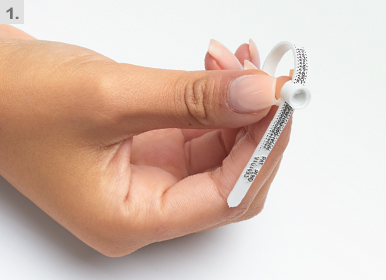
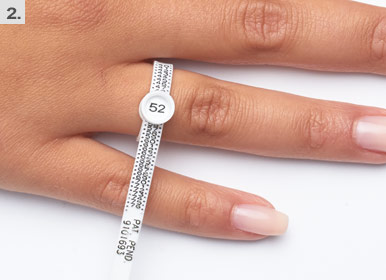
Multisizer

If you are unsure about your ring size, we can send you a Multisizer for EUR 3.50.

If you have little experience with rings, we recommend having your ring size measured by a jeweler. The Multisizer is only a guide; if used incorrectly, deviations from your actual size may occur.

Image: Multisizer 1 Multisizer instructions image 1
Image: Multisizer 2 Multisizer instructions image 2

Watch guide

Watch case size
Size Description Watch case
Ssmall26–35 mm
Mstandard36–40 mm
Llarge41–45 mm
XLextra large46–50 mm
XXLoversized>55 mm
Which watch size fits my wrist?

The following size tables show different watch characteristics. These measurements make it easier to find the right watch size for your wrist.

SizeDescriptionWatch case
Ssmall26–35 mm
Mstandard36–40 mm
Llarge41–45 mm
XLextra large46–50 mm
XXLoversized>55 mm
Case heightThickness
Slim< 9 mm
Standard9–14 mm
Thick>14 mm
Water resistance of watches

The water resistance of a watch should be checked by a professional every two to three years—ideally once a year before the swimming season. The bar rating is not the same as the corresponding water depth.

None Not water-resistant Washing/rain: no · showering/bathing/swimming: no
3 bar Everyday splashes Washing/rain: yes · showering/bathing/swimming: no
5 bar Frequent water contact Washing/rain: yes · swimming/diving: no
10 bar Swimming possible Showering/bathing/swimming/snorkeling: yes · scuba diving: no
15 bar Very water-resistant All contact with water: yes · scuba diving also possible
Note: Permanent water resistance cannot be guaranteed. Have the water resistance checked regularly by a professional.