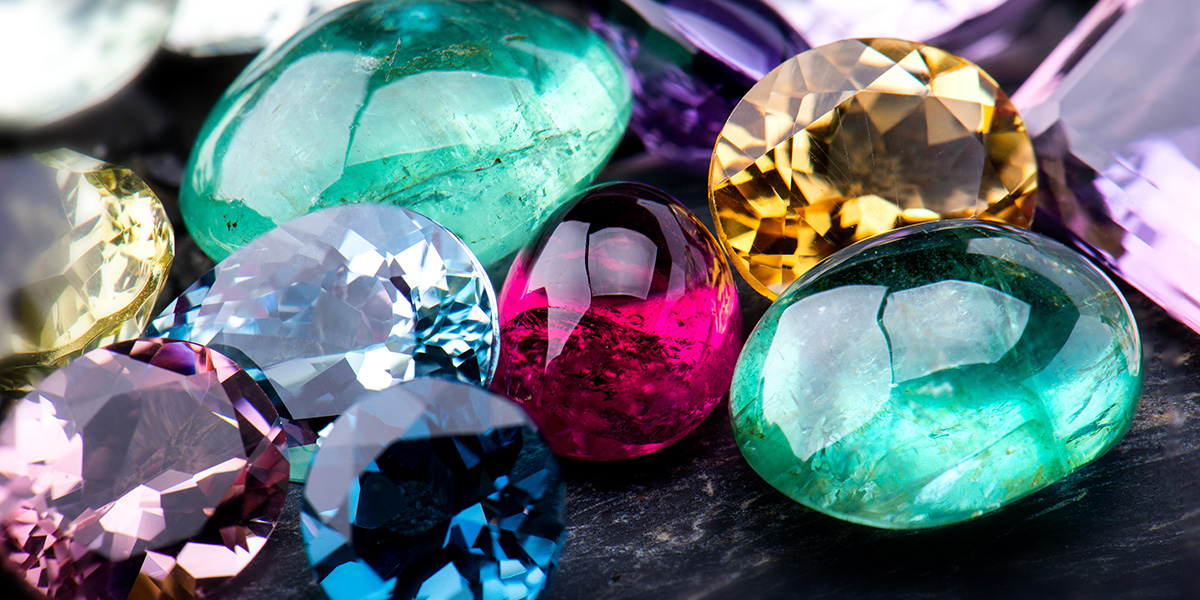
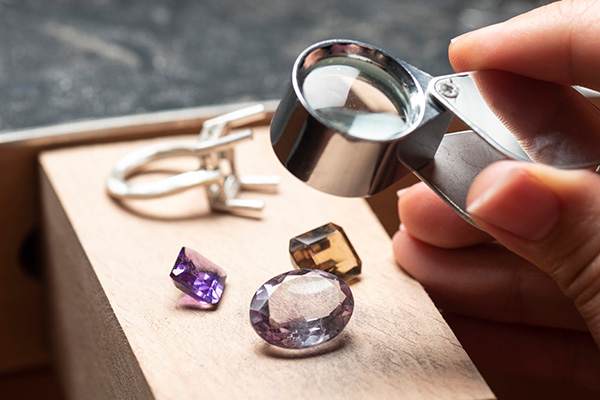
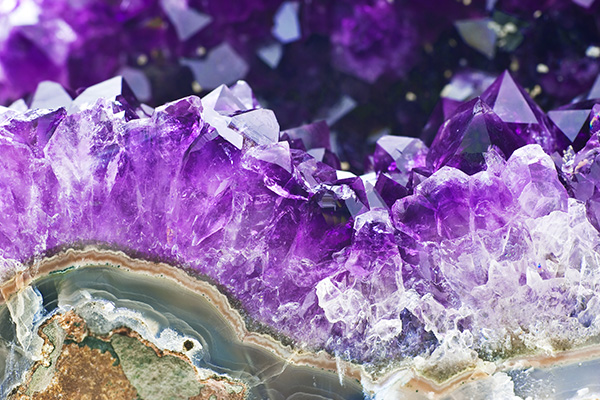
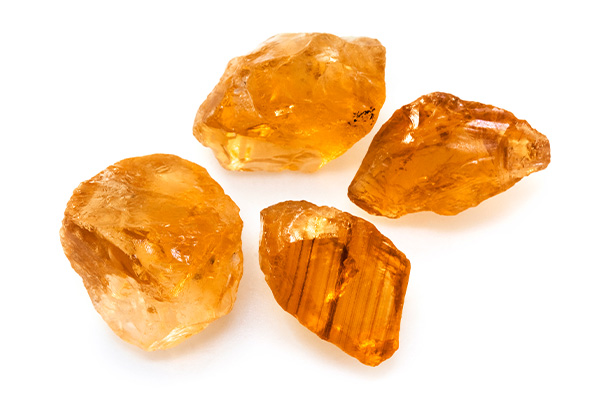
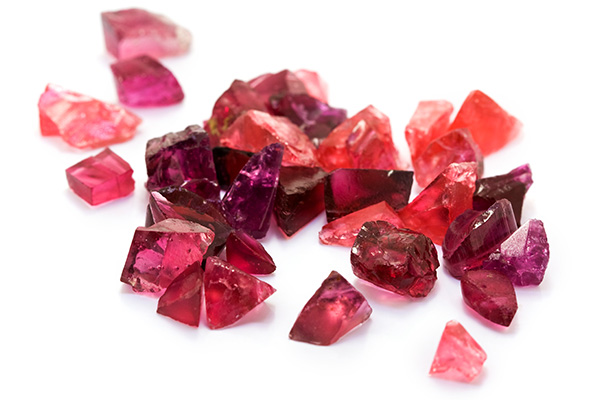
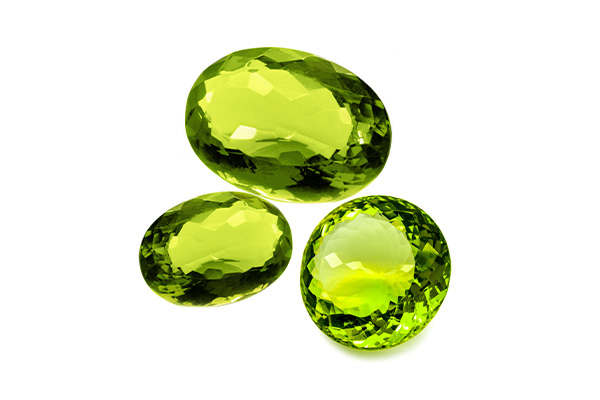
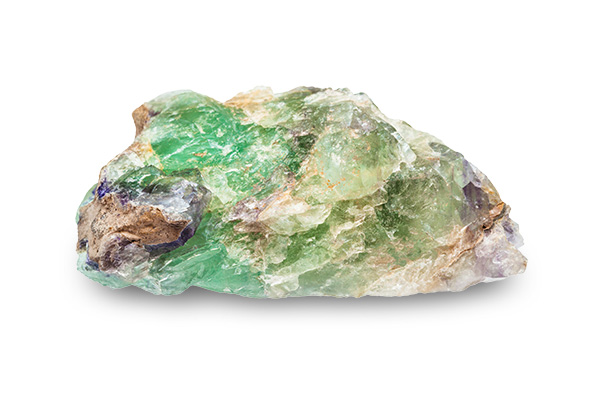
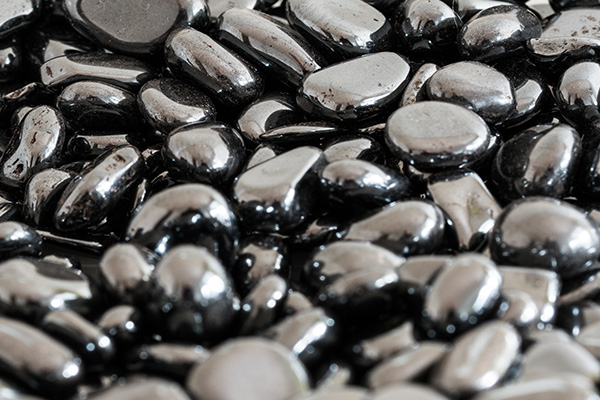
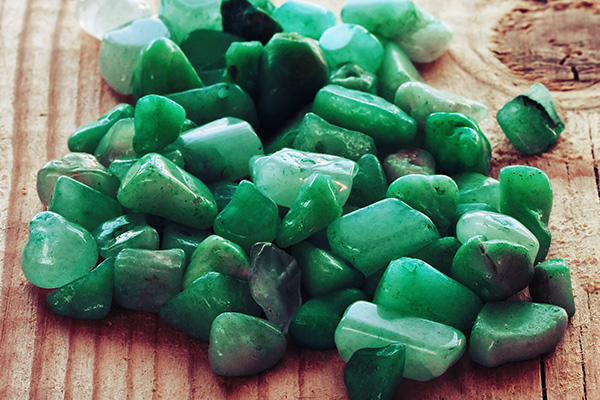
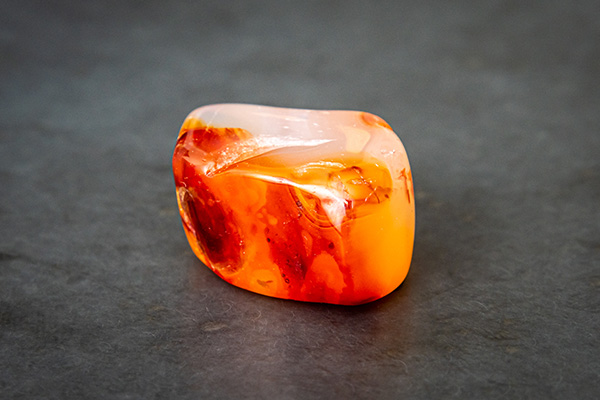
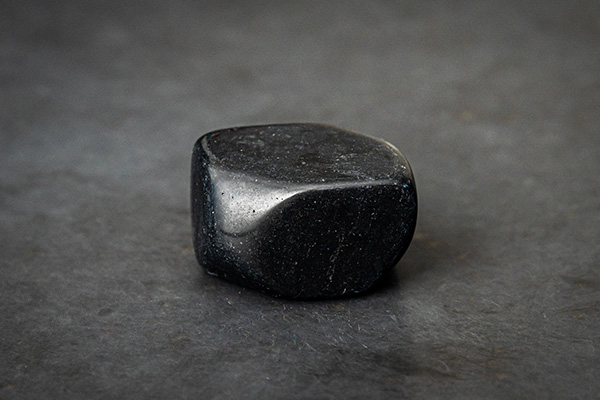
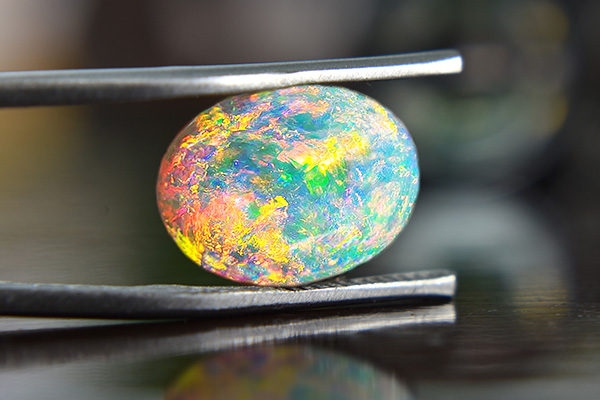
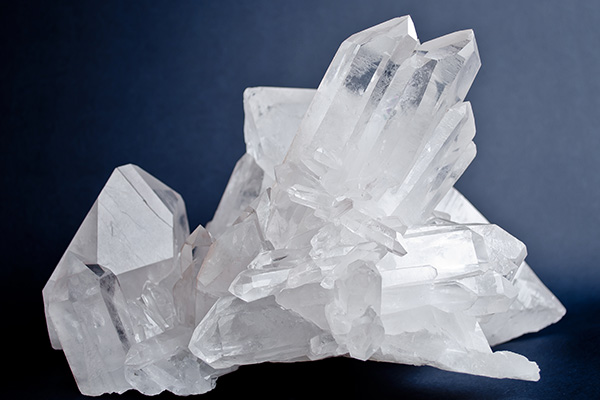
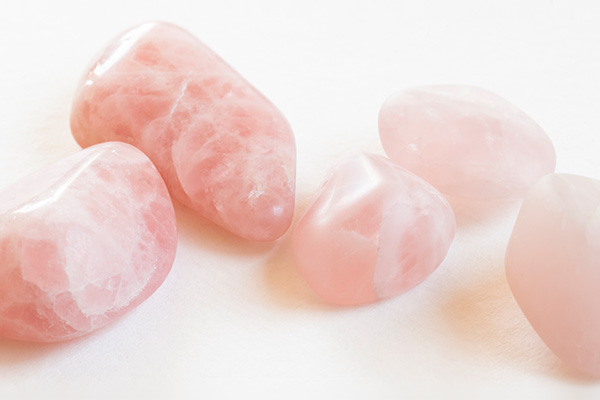
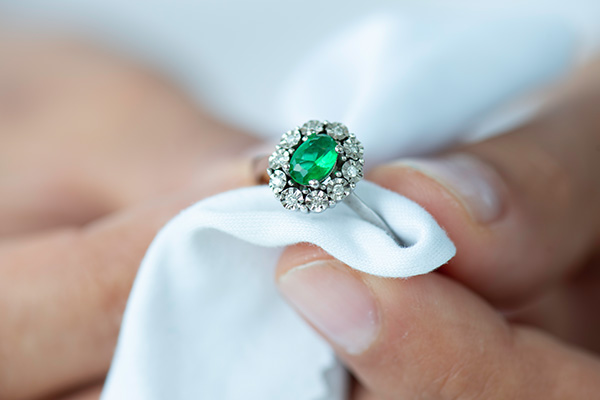
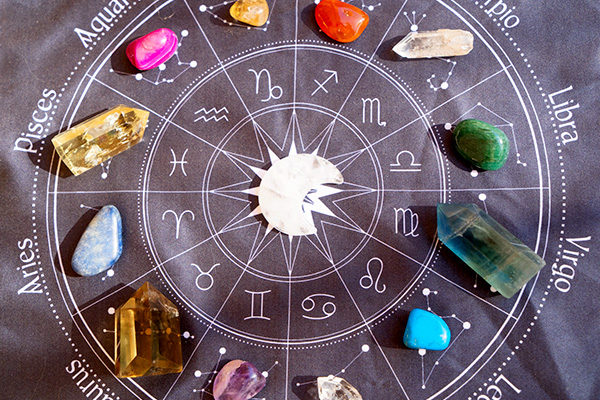
The world of precious and semi-precious stones is fascinatingly diverse because it reveals the entire beauty of nature. Processed into beautiful necklaces, bracelets, rings, and earrings, gemstone jewellery captivates with its individual charm. In this guide, you will learn more about the world of gemstones and gemstone jewellery.
Table of contents:
What are gemstones?
The term gemstone encompasses various minerals and rocks that are valued for their beauty and preciousness, enjoying great popularity in jewellery making. Although there are several thousand minerals, only some are considered gemstones. There is no precise definition of what constitutes a gemstone. In general, a mineral must exhibit certain characteristics to be classified as a gemstone.
These characteristics include the rarity and hardness of the mineral, as well as aesthetic aspects such as colour intensity, transparency, and shine. The rarer a mineral is, the more valuable it is. The relative hardness and scratch resistance of a mineral are determined using the Mohs scale. Talc is the mineral with the lowest hardness on the Mohs scale, with a value of 1. The hardest mineral on earth with a value of 10 is diamond. To be classified as a gemstone, a mineral must have a value of at least 8 on the hardness scale. In addition to colour intensity, another criterion for gemstones is their transparency, which involves visible inclusions in the stone.
In combination with the right cut, gemstones achieve their characteristic sparkle, known as fire. Only the cut gives gemstones an appealing shape and ensures a particularly beautiful refraction of light on the surface of the gemstone. The cut imparts a beautiful luster and intense colour glow, bringing out the perfect beauty of the gemstones. Like diamonds, gemstones are available in different cut styles. In addition to the brilliant cut, there is also the step cut. The emerald cut is popular for emeralds, and gemstones with a cat's eye effect often receive a cabochon cut to emphasize the fascinating shimmer even more.
Types of gemstones
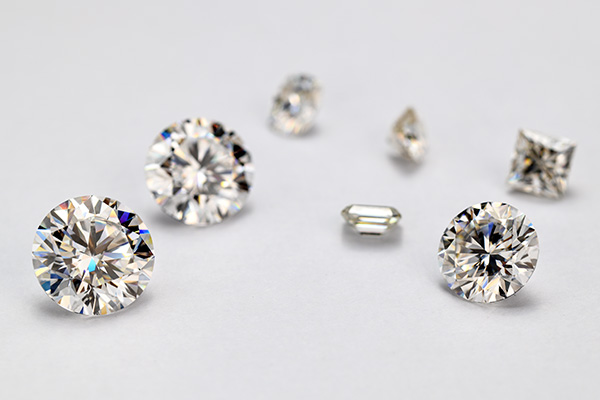
The most valuable gemstone is the diamond. Despite being the crystalline form of elemental carbon, the Diamond is classified as a gemstone. The moissanite is also considered a gemstone and closely follows the diamond with a hardness of 9.5 on the Mohs scale. Following closely is corundum with a hardness of 9. The most well-known varieties of corundum are ruby and sapphire. The emerald is a variety of beryl and, like topaz and pyknite, has a hardness of 8. All these minerals meet the criteria for classifying as gemstones.
Difference between precious and semi-precious stones
The term semi-precious stone is nowadays replaced by the term gemstone. This refers to minerals that, while distinguished by their beauty, are considered less valuable. This is because these minerals occur more frequently in nature and have a lower hardness (a Mohs hardness of 7 or lower). Additionally, such minerals often lack transparency and inherent fire. For example, there are minerals like moonstone or tiger eye that instead captivate with a fascinating chatoyancy (tiger eye effect). Below are listed some other well-known gemstones.
Most popular gemstones
The diamond continues to be considered the most popular and valuable gemstone of all. In the category of coloured gemstones, ruby, sapphire, and emerald are among the most well-known and coveted. This trio is called 'the big three' because they are particularly rare and have high hardness. All three gemstones are less common than diamonds and can also be more expensive depending on quality.
The rarest gemstones
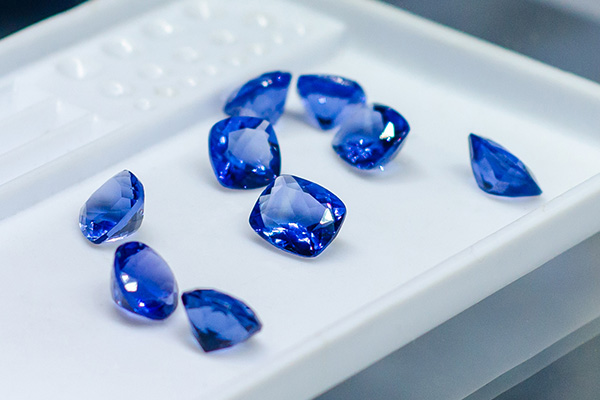
One of the rarest gemstones in the world is the tanzanite, first discovered in Tanzania. Another rare gemstone is musgravite, first found in the Musgrave Ranges mountain range in Australia.
Value and quality of gemstones
The value of a precious or semi-precious stone is mainly determined by its rarity, hardness, colour intensity, and transparency. Gradations in colour richness or reduced transparency, resulting from inclusions or impurities in the stones, also impact their quality. Depending on the type of stone, these quality features have a significant or minor effect on the overall value of the stone. For diamonds, the 4 C's are used as criteria for value and quality. The 4 C's stand for Cut, Colour, Clarity, and Carat. For more detailed information on these criteria, you can refer to our
diamond guide.
Colour variety
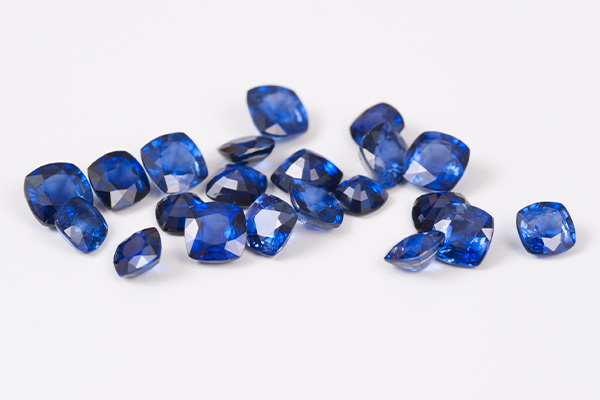
The unique colour variety of gemstones, semi-precious stones, or precious stones is created through different traces of trace elements in the minerals. Both ruby and sapphire, for example, are variations of the mineral corundum. Chemically, corundum is aluminum oxide, and it acquires different colours through various trace elements. In the case of ruby, the trace element chromium is responsible for its characteristic red colour. sapphire contains inclusions of iron, resulting in a deep blue colour. Sapphires are also found in other colours, ranging from various shades of blue to pink, orange, green, and white.
Formation
Gemstones and semi-precious stones are formed deep within the earth. The formation process takes three to ten million years and requires immense pressure and high temperatures. There are three different types of rocks in which gemstones and semi-precious stones have formed: Igneous rock, metamorphic rock, and sedimentary rock. Some gemstones and semi-precious stones form during the cooling of liquid magma in igneous rock, where the minerals contained crystallize under the pressure inside the earth (e.g., granite, obsidian, and peridotite). They can also form through a metamorphic process when liquid magma penetrates existing rock formations (e.g., jade, emerald, garnet, and lapis lazuli). The secondary mineral formation in sedimentary rock also produces gemstones and semi-precious stones. This happens through the deposition of sediments or the weathering process (e.g., jasper, onyx, marble, azurite, malachite, various opals, and turquoise). Through volcanic activity, the valuable stones are brought to the earth's surface. Therefore, gemstones and semi-precious stones are mostly found in mountain ranges but also in riverbeds, on the seafloor, or in dried-up bodies of water.
Discovery sites
Gemstones are found on every continent. However, some continents or countries have particularly large deposits of certain gemstones. Large deposits of gemstones are found in Africa, Australia, and Asia. South Africa is known for its numerous diamond mines. The rare Tanzanite is mined in Tanzania, and in South and Southwest Africa, there are tourmalines. In Europe, there are also some locations where gemstones and semi-precious stones are found. Quartz varieties such as amethyst, smoky quartz, rose quartz, and rock crystal are frequently found in Europe. The city of Idar-Oberstein in the Hunsrück region has become famous for its natural occurrence of gemstones. Agate, as well as jasper and rock crystal, were predominantly mined there. Another well-known location in Europe is the Austrian Habachtal, which has become famous for its high occurrence of emeralds.
Types of precious and semi-precious stones
As there is a variety of coloured gemstones and semi-precious stones (gemstones), we present to you the most well-known stones with their key characteristic features.
You can directly browse through your favorites here.
Famous Gemstones
Moissanite
Mineral type: silicon carbide
Hardness: 9.5
Colour: transparent with a rainbow-coloured luster
Occurrence: extremely rare
Locations: in small quantities in the upper layers of the Earth and in meteorites; mostly produced in laboratories nowadays
For more information, you can refer to our encyclopedia entry on
moissanite.
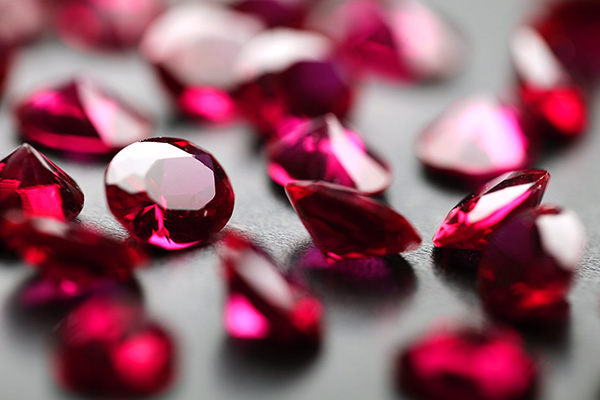
Ruby
Mineral type: variety of corundum (aluminum oxide)
Hardness: 9
Colour: Red (with varying shades of pink and purple)
Occurrence: very rare
Locations: Myanmar, Madagascar, Mozambique, Kashmir, Afghanistan, among others
For more information, you can refer to our encyclopedia entry on
ruby.
Sapphire
Mineral type: variety of corundum (aluminum oxide)
Hardness: 9
Colour: dark blue, navy blue, and cornflower blue; but also yellow, pink, salmon-coloured (Padparadscha Sapphire), and white (Leuco Sapphire)
Occurrence: very rare
Locations: Sri Lanka, Myanmar, Madagascar, Kashmir, Australia, Cambodia, among others
For more information, you can refer to our encyclopedia entry on
sapphire.
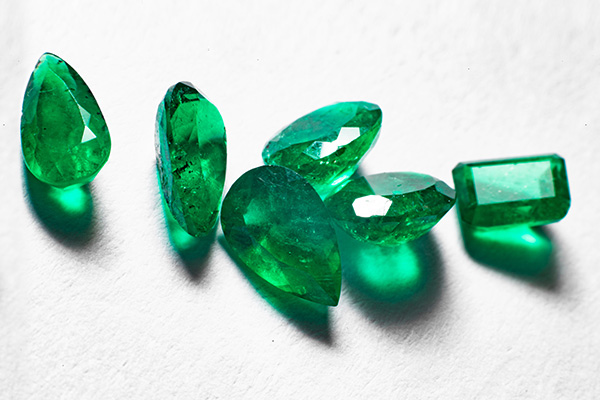
For more information, you can refer to our encyclopedia entry on
emerald.
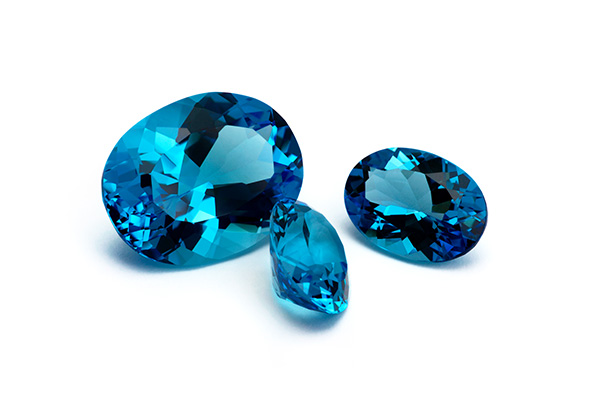
Blue Topaz
Mineral type: variety of topaz (silicate)
Hardness: 8
Colour: light blue; Sky Blue Topaz, Swiss Blue Topaz, and London Blue Topaz
Occurrence: very rare
Locations: Zimbabwe, Namibia, Norway, Madagascar, USA
For more information, you can refer to our encyclopedia entry on
blue topaz.
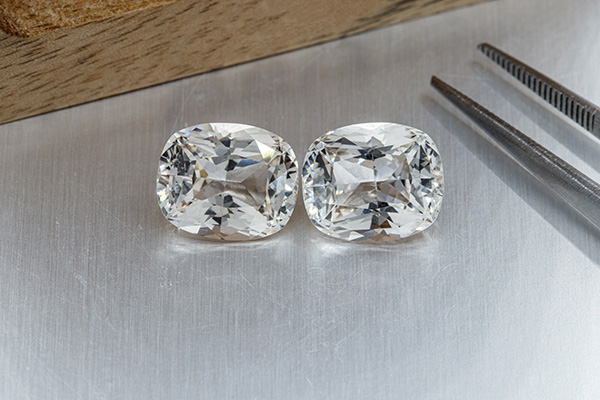
White Topaz
Mineral type: variety of topaz (silicate)
Hardness: 8
Colour: purest form of Topaz, contains no colour-inducing elements
Occurrence: common
Locations: Northern Ireland, Australia, Germany
For more information, you can refer to our encyclopedia entry on
white topaz.
Common semi-precious stones
Amethyst
Mineral type: variety of quartz (silicon dioxide)
Hardness: 7
Colour: purple
Occurrence: relatively rare
Locations: Brazil, Uruguay, Madagascar, Zambia, Morocco, India, USA, Russia
For more information, you can refer to our encyclopedia entry on
amethyst.
Citrine
Mineral type: variety of quartz (silicon dioxide)
Hardness: 7
Colour: pale yellow to orange-brown
Occurrence: very rare
Locations: Russia (Ural), Argentina, Burma, Brazil, Spain, France, India, Bolivia, USA
For more information, you can refer to our encyclopedia entry on
citrine.
Garnet
Mineral type: silicates and germanates
Hardness: 7
Colour: dark red; can also be yellow, green, or black
Occurrence: common
Locations: USA, Brazil, Sri Lanka, South Africa
For more information, you can refer to our encyclopedia entry on
garnet.
Peridot
Mineral type: particularly pure variety of the mineral olivine
Hardness: 6.5 - 7
Colour: light green
Occurrence: common
Locations: Pakistan, China, USA, Myanmar, Egypt, Tanzania
For more information, you can refer to our encyclopedia entry on
peridot.
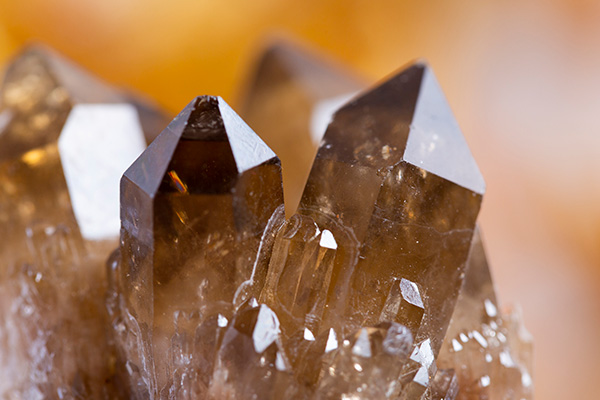
Smoky Quartz
Mineral type: variety of quartz (silicon dioxide)
Hardness: 7
Colour: grayish-brown to black
Occurrence: common
Locations: Australia, Brazil, Madagascar, Russia, Switzerland, Scotland, Ukraine, USA
For more information, you can refer to our encyclopedia entry on
smoky quartz.
Jewellery creations with these precious and semi-precious stones can be found in our
premium brand Brilladia Gems. The range includes earrings, necklaces, and pendants with various coloured precious and semi-precious stones set in yellow, white, and rose gold settings.
Other well-known semi-precious stones
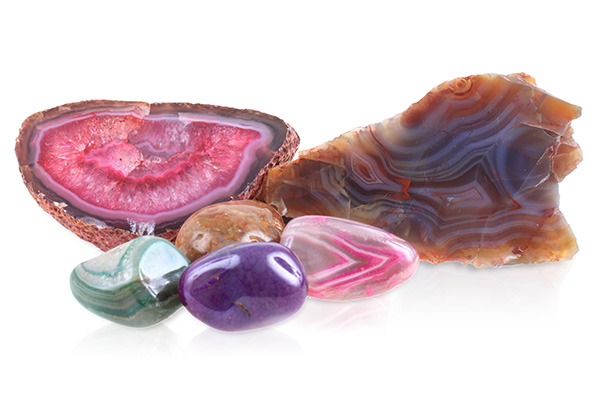
Agate
Mineral type: variety of quartz (silicon dioxide)
Colour: colourful (striped pattern in various colour variations)
For more information, you can refer to our encyclopedia entry on
agate.
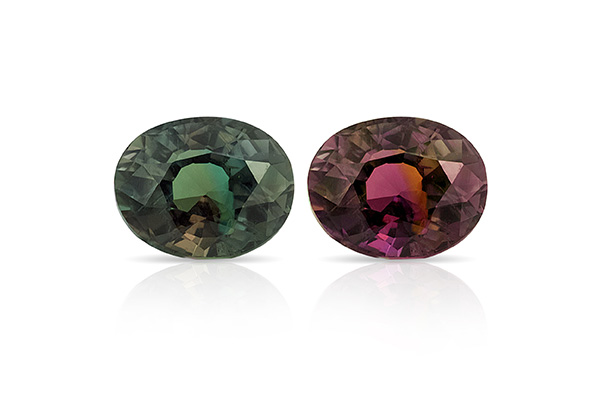
Alexandrite
Mineral type: variety of chrysoberyl (silicate)
Colour: green to red
For more information, you can refer to our encyclopedia entry on
alexandrite.
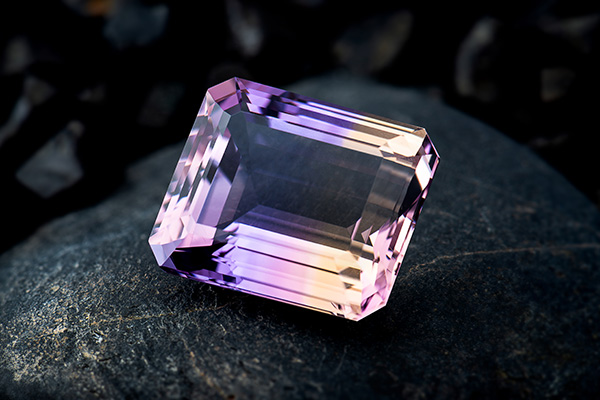
Ametrine
Mineral type: variety of quartz (combination of amethyst and citrine)
Colour: violet to yellow
For more information, you can refer to our encyclopedia entry on
ametrine.
Apatite
Mineral type: phosphates, arsenates, vanadates
Colour: red, green, yellow, blue, or yellow-green
For more information, you can refer to our encyclopedia entry on
apatite.
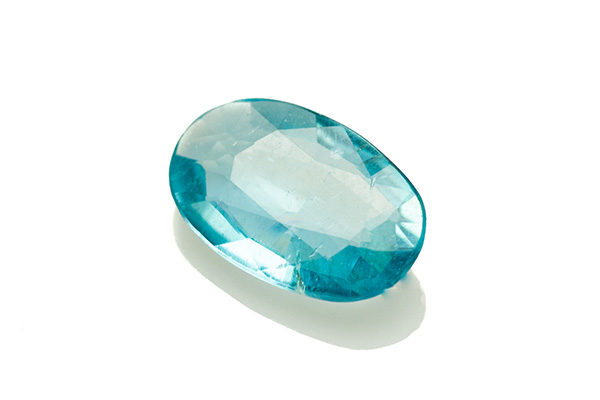
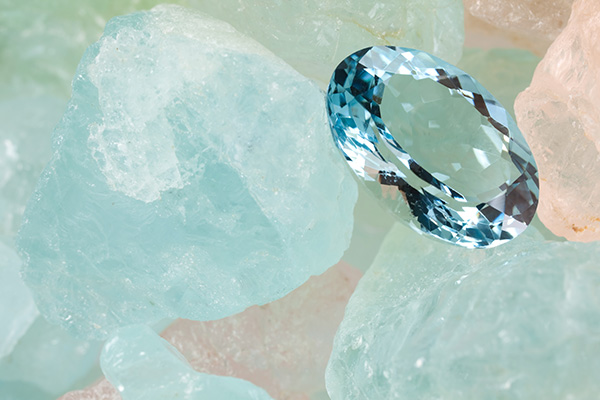
Aquamarine
Mineral type: variety of beryl (silicate)
Colour: light blue
For more information, you can refer to our encyclopedia entry on
aquamarine.
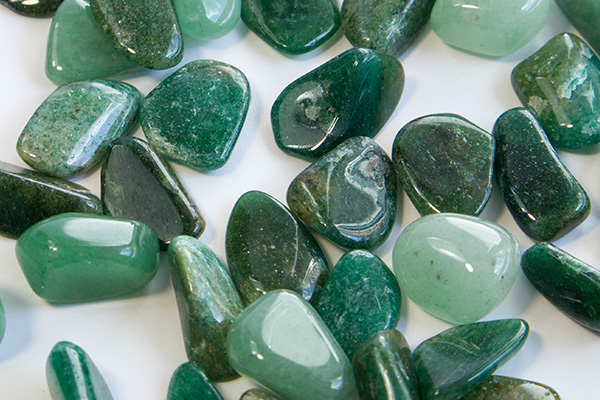
Aventurine
Mineral type: variety of quartz (silicon dioxide)
Colour: green
For more information, you can refer to our encyclopedia entry on
aventurine.
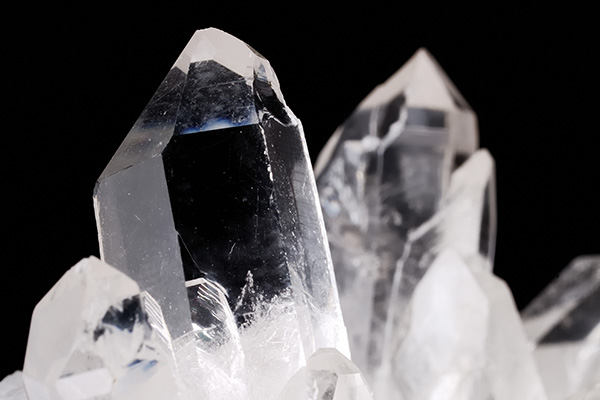
Rock Crystal
Mineral type: variety of quartz (silicon dioxide)
Colour: transparent with a glassy sheen
For more information, you can refer to our encyclopedia entry on
rock crystal.
Beryl
Mineral type: silicates and germanates
Colour: clear and colourless; occurs in various colour varieties due to trace elements (green, blue, pink)
For more information, you can refer to our encyclopedia entry on
beryl.
Hematite
Mineral type: metal oxide
Colour: black
For more information, you can refer to our encyclopedia entry on
hematite.
Jade
Mineral type: jadeite (augite group)
Colour: green
For more information, you can refer to our encyclopedia entry on
jade.
Carnelian
Mineral type: variety of chalcedony (silicon dioxide)
Colour: brown
For more information, you can refer to our encyclopedia entry on
carnelian.
Cat's Eye
Mineral type: variety of quartz (silicon dioxide)
Colour: yellow-green
For more information, you can refer to our encyclopedia entry on
cat's eye.
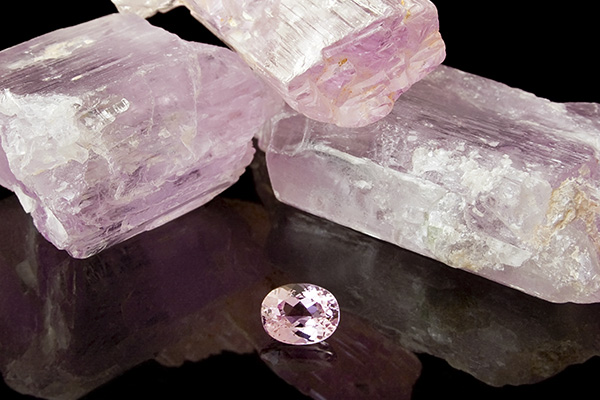
Kunzite
Mineral type: variety of spodumene (lithium-aluminum-silicate)
Colour: Pink to violet
For more information, you can refer to our encyclopedia entry on
kunzite.
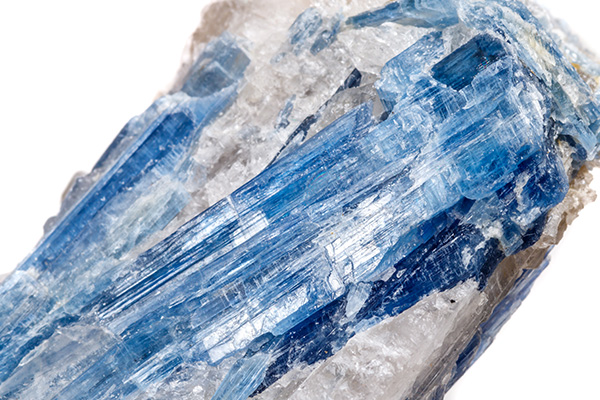
Kyanite
Mineral type: silicates and germanates
Colour: blue
For more information, you can refer to our encyclopedia entry on
kyanite.
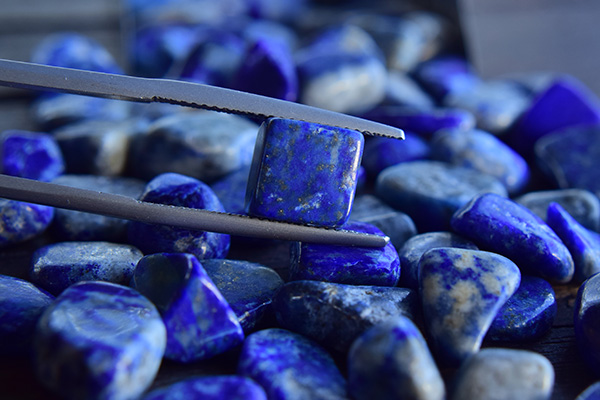
Lapis Lazuli
Mineral type: composed of varying proportions of the minerals lazurite, pyrite, calcite and
traces of sodalite and diopside
Colour: deep blue and glossy
For more information, you can refer to our encyclopedia entry on
lapis lazuli.
Malachite
Mineral type: copper carbonate
Colour: green
For more information, you can refer to our encyclopedia entry on
malachite.
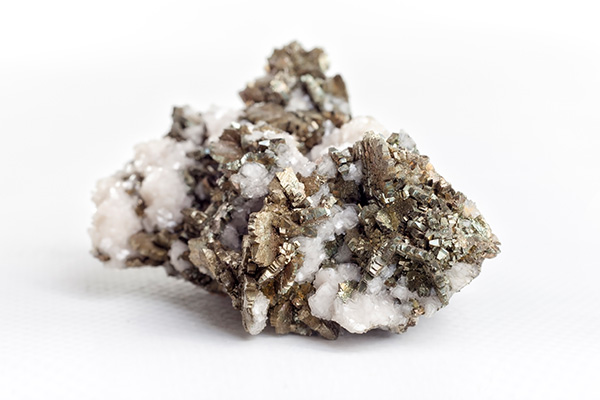
Marcasite
Mineral type: iron disulfide
Colour: dark bronze tone
For more information, you can refer to our encyclopedia entry on
marcasite.
Morganite
Mineral type: variety of beryl (silicate)
Colour: pink to violet
For more information, you can refer to our encyclopedia entry on
morganite.
Onyx
Mineral type: variety of chalcedony (silicon dioxide)
Colour: black and white
For more information, you can refer to our encyclopedia entry on
onyx.
Opal
Mineral type: oxides and hydroxides
Colour: colourless or with milky, gray, red, yellow, or brown hues in various intensities
For more information, you can refer to our encyclopedia entry on
opal.
Quartz
Mineral type: silicon dioxide
Colour: transparent and colourless; can also occur in various colour varieties
For more information, you can refer to our encyclopedia entry on
quartz.
Rose Quartz
Mineral type: variety of quartz (silicon dioxide)
Colour: pink
For more information, you can refer to our encyclopedia entry on
rose quartz.
Tanzanite
Mineral type: zoisite
Colour: blue
For more information, you can refer to our encyclopedia entry on
tanzanite.
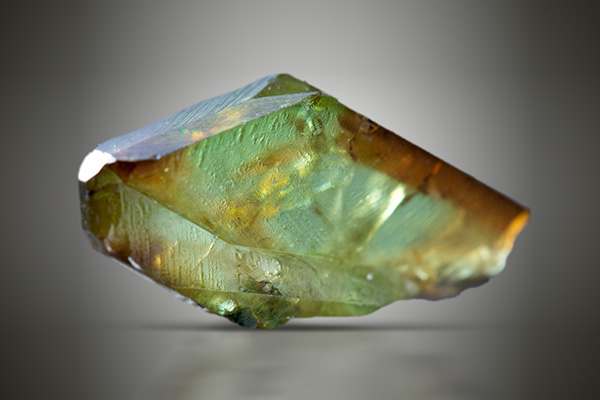
Titanite
Mineral type: calcium titanium silicate
Colour: colourless; can also be brown, yellow, green, gray, or black
For more information, you can refer to our encyclopedia entry on
titanite.
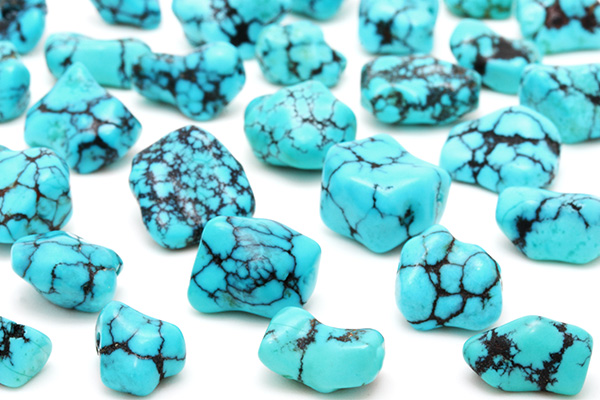
Turquoise
Mineral type: copper aluminum phosphate
Colour: turquoise
For more information, you can refer to our encyclopedia entry on
turquoise.
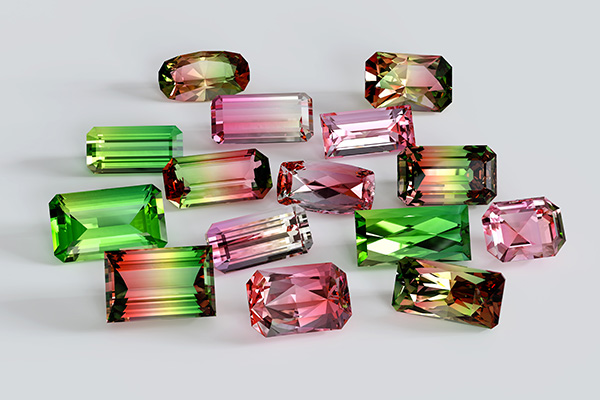
Tourmaline
Mineral type: silicate
Colour: blue, green, red, pink, brown, and black (sometimes in a single crystal)
For more information, you can refer to our encyclopedia entry on
tourmaline.
Types of gemstone jewellery
Jewellery with gemstones can be made from various materials. Both 925 sterling silver and gold alloys, as well as platinum, can be set with precious and semi-precious stones. Depending on the chosen material, beautiful colour contrasts can be created with the respective coloured gemstones. Gemstones add exclusive colour accents to the jewellery pieces and can beautifully highlight specific body parts.
Different settings can wonderfully highlight the colourful precious and semi-precious stones and further emphasize their beauty. Whether it's a classic bezel setting or an elegant prong setting with four or six delicate prongs, there is something suitable for every style. Jewellery with gemstones is not only suitable for special occasions; it can also create colourful accents for everyday outfits. Thus, a gemstone necklace, a gemstone bracelet, a gemstone ring, or gemstone earrings can become a real eye-catcher in the outfit.
Care tips
Jewellery with gemstones requires special care, as the stones vary depending on their type. Below, we have compiled some useful tips for handling gemstone jewellery:
Store your jewellery pieces in separate compartments of a jewellery box to avoid scratches
Put on your gemstone jewellery after using cosmetics, hairspray, or perfume to prevent discolouration of the stones
Remove your gemstone jewellery before sports or other activities that could damage the jewellery
Learn in advance about the specific care suitable for your particular stone
Do not use common cleaning agents for cleaning unless you are sure they are suitable
Clean your jewellery regularly with a damp, lint-free cloth to quickly eliminate possible impurities
In general, most gemstones can be cleaned with a lint-free cloth. For some gemstones, cleaning in a warm water bath with a little soap is possible. This cleaning method can be safely used, especially for rubies and sapphires. Cleaning methods such as steam or ultrasonic cleaning offer particularly thorough cleaning of gemstone jewellery. However, they are not suitable for every precious and semi-precious stone and should only be used if you are certain they will not damage the respective stone.
Birthstones
Gemstone jewellery, with its beautiful array of colours, possesses a special allure. Serving as a symbol of immortality, wealth, and power, precious and semi-precious stones have been coveted for millennia. Since ancient times, gemstones have been crafted into jewellery alongside gold, silver, and other materials, with mystical or healing powers attributed to them. Hence, gemstones are often worn as amulets and talismans.
From this tradition emerged the practice of birthstones. With the introduction of the Gregorian calendar, a specific gemstone was assigned to each month. Wearing the gemstone of one's respective birth month was believed to enhance its healing effects. Thus, individuals could carry the gemstone of their birth month as a piece of jewellery. Birthstones are said to amplify the positive character traits associated with a particular zodiac sign. Moreover, as everyday companions, they are believed to protect and bring luck to their wearers.
Which birthstone corresponds to each month?
Here we introduce the birthstones for the 12 calendar months. In esoterics, each gemstone represents specific characteristics, and special healing effects are attributed to each gemstone.
Birth Month
Gemstone
Represents
Healing Effects
January
Garnet
Friendship and new beginnings
Circulation
February
Amethyst
Sincerity and peace
Assists with intoxication and provides inner peace
March
Aquamarine
Health, hope, and security
Assists with poisonings and fosters determination
April
Diamond
Purity, strength, and courage
Provides strength and a strong self-confidence
May
Emerald
Wisdom, patience, and harmony
Benefits eye disorders and fertility
June
Alexandrite and moonstone
Purity, beauty, and contentment
Affects the psyche
July
Ruby
Love and passion
Instills courage and authority
August
Peridot
Maturity, acumen, and success
Assists with nightmares, provides self-confidence and physical strength
September
Sapphire
Sincerity, wisdom, loyalty, and empathy
Bestows inner peace
October
Opal and tourmaline
Creativity, knowledge, and success
Heart health
November
Citrine and topaz
Youth and health
Sleep disorders and fever
December
Tanzanite, turquoise, and zircon
Endurance and assertiveness
Depression and respiratory problems
Image sources
Cover picture: iStock.com/Nopadol Uengbunchoo
The most popular gemstones: i.Stock/solidcolours
Value and quality of gemstones: i.Stock/solidcolours
Formation of gemstones: i.Stock/Ja_Het
Care tips: i.Stock/solidcolours
Birthstones: i.Stock/neirfy
¹Free shipping from €100 shopping basket value for deliveries within Germany.
³Valid through 05/04/2026 (inclusive). Minimum order value €699. Valid only for our wedding ring configurator. Cannot be combined with other discount promotions or vouchers. One-time redemption per customer. For consumers only.
5% DISCOUNT*
on your order
*Offer ends midnight 31/12/2026. No minimum order value. No combination with other discounts or vouchers. Not valid for the purchase of products with certified GIA and IGI diamonds, brand jewellery on SALE and gift vouchers. Only redeemable once per customer. For private customers only.